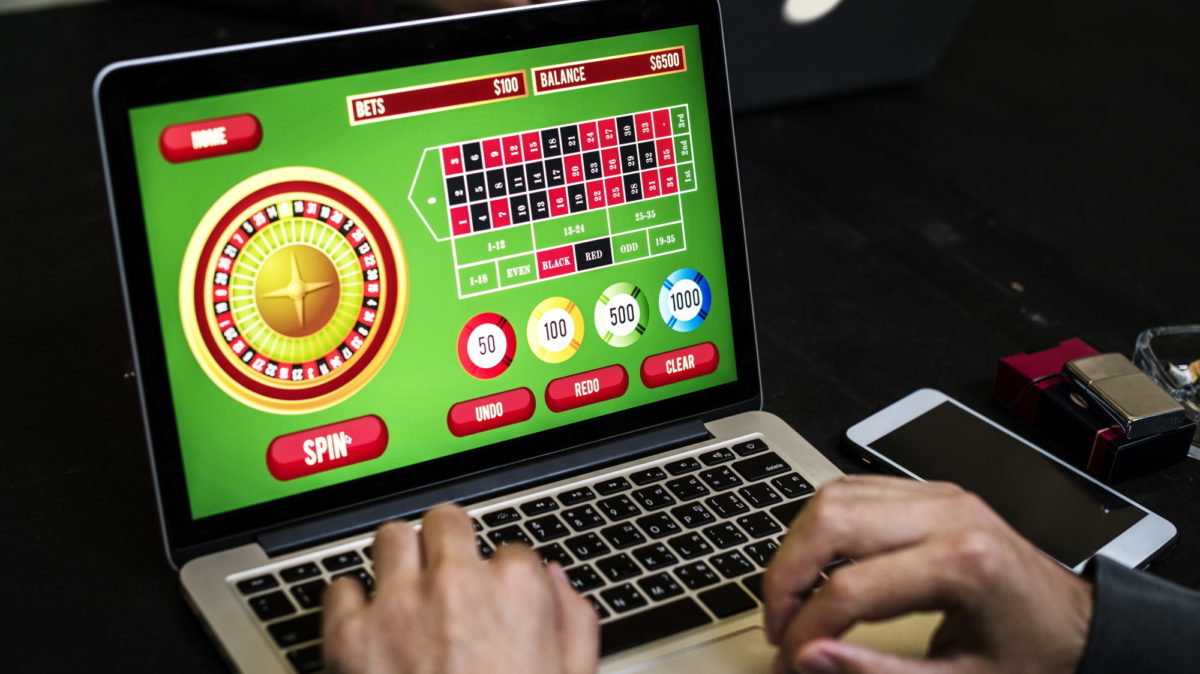
I still recall the first time I sat down to submit a self-exclusion request https://spiritscasino.net/. The form seemed heavy. Not because it was complicated, but because I was taking a deliberate choice to bar myself from something I had viewed as entertainment for years. Back then, I did not understand how much practical support exists behind that single button. Self-exclusion tools at online casinos have advanced significantly. Operators like Spirit Casino now place them right inside the account dashboard, so you never have to justify your decision to a support agent if you do not want to. This guide is not about criticizing anyone. It is about grasping exactly what happens when you opt to step away: how the different exclusion tiers function, what they include, and what they exclude. I will take you through each step, from a short time-out to a permanent block. Along the way, I will demonstrate how Spirit Casino incorporates responsible gambling tools into a platform that also provides hundreds of slots, live dealer tables, and instant-win games, backed by familiar payment methods and a mobile-first design that operates on any device.
The way Self-Exclusion Operates at an Online Casino
Once I enable self-exclusion at Spirit Casino, the system instantly logs me out and stops any new login with my credentials. Under the hood, the platform flags my account so that even if I try to register a new account using the same name, email, phone number, or payment method, the automated checks detect the duplicate and block the registration. This is not a one-size-fits-all block; it is a rule set applied across the casino’s entire ecosystem. That means I lose access to the slots lobby with its progressive jackpots and Megaways titles, the live blackjack and roulette tables streamed from professional studios, and any active bonuses such as the welcome package or cashback offers that I might have been hoping to use. The exclusion also suspends any pending withdrawal requests so that the casino can process them according to normal timelines without the account being accessible. Once the exclusion period ends, if it is a temporary one, the account does not automatically reactivate. I must go through a reactivation request that includes a mandatory cooling-off waiting period, usually measured in days, to ensure I am making a deliberate return rather than an impulsive one.
What I see especially useful is the clarity Spirit Casino provides around the different self-exclusion tracks before I even commit. The support hub lists every consequence in plain language, so there is no surprise about whether I will still receive promotional emails or whether I can access my transaction history. Here is what I discovered a self-exclusion at Spirit Casino typically includes:
- Total login barring across the website and any associated mobile apps, so the casino is unreachable with my existing credentials.
- Stopping of all marketing communications, including email, SMS, and push notifications, within the legally required timeframe.
- Limitation on opening new accounts under the same personal details, even if I try a different email or device.
- Automatic deletion from loyalty point accrual and VIP tier benefits for the duration of the exclusion.
- Handling of any remaining withdrawal requests, though active deposit methods are frozen and cannot be used again until reactivation.
Which Self-Exclusion Encompasses (and What It Fails to Cover)
I considered it important to understand the boundaries of self-exclusion, because believing too much can lead to a incorrect sense of security. At Spirit Casino, the exclusion pertains to the exact account I opened and any accounts I might try to open with the brand. It restricts access to all real-money gaming categories: video slots, classic table games, live dealer sessions, scratch cards, and any instant-win or arcade-style games. It also stops me from participating in tournaments and from using bonuses or free spins that might still be visible in a promotional email. The casino ceases sending those emails once the exclusion is handled, but there is a short overlap window where I may still see a cached advertisement; the key thing is that I cannot use it because my account is frozen. Payment methods are frozen as well, which indicates I cannot fund through cards, e-wallets like Skrill and Neteller, or bank transfers as long as the exclusion is in force. Withdrawals that were already in progress continue to be completed, so my money is not locked.
What self-exclusion does not cover is just as crucial. The block functions solely within the platform of Spirit Casino. It does not extend to other online casinos, even those operated by the same corporate family, except when the operator participates in a national multi-operator self-exclusion scheme in my jurisdiction. If I want to block access across various platforms, I have to enroll with that separate program where available, because Spirit Casino is unable to impose an exclusion outside its own platform. Self-exclusion also does not block me from reading casino review sites, watching gambling streams, or keeping gambling apps on my phone from other companies. It doesn’t curb problem-gambling behavior in land-based venues, nor does it prevent me from asking a friend to place a bet on my behalf. The tool is a strong deterrent, but it is a barrier around one site, not a cover over my complete virtual world. Here is a brief summary of what I view as the coverage limitations:
- Different gambling sites not using the same license or brand name are still reachable unless I self-exclude with every one of them or utilize a nationwide system.
- Social gaming apps that don’t need real-money play may still be available, and excluding myself from Spirit Casino does not impact them.
- Promotional messages from external partners may still arrive until I remove myself from each of those, however Spirit Casino cannot control affiliate lists once the opt-out is active.
- Individual financial services: the exclusion does not apply a hold to my payment card or e-wallet at the payment service level; I would need to contact those entities separately.
Navigating the Psychological Aspect: What to Expect Before, During, and After Self-Exclusion
I aim to be candid about this since the procedural steps are straightforward. The psychological burden of self-exclusion caught me off guard. In the hours before I filed the request, I experienced a combination of apprehension and irritation. Irritation that I allowed things to get to a point where I had to have a block, and anxiety about how I would occupy myself the time I used to spend at the tables. What proved useful was reconsidering the decision: I was not “banning myself from fun” but rather protecting my own time and money in a period when I recognized my judgment was slipping. Throughout the exclusion, I occasionally felt the desire to see the latest slot release or to see whether my usual live roulette dealer was online. As I wasn’t able to log in, the urge would surge and then subside much more quickly than I anticipated. I used that freshly liberated time to resume evening routines I had abandoned: a walk, a podcast, a call with a friend. Spirit Casino, like many licensed operators, refers to independent support organizations straight on its responsible gaming page, and I discovered it useful to bookmark a helpline merely so I was aware it was there, although I didn’t need to dial it.
The period following an exclusion ends presents its own challenges. If I opted for a temporary exclusion, the reactivation request requires me to wait a specified number of days and sometimes necessitates a conversation with the support team. That lag is not a nuisance; it is a integrated safety net. It stopped me from reactivating the account on a whim following a tough day. When I eventually regain access, I also established a deposit limit less than my old one and turned on the reality-check timer that shows every 45 minutes of play. I talk about this as self-exclusion is hardly ever a one-and-done solution; it functions optimally when I combine it with an honest look at my habits and the support network I have. The casino’s job is to provide the tools and to enforce them consistently. Spirit Casino’s system accomplished just that, and since the exclusion was managed without drama, it seemed less like a confrontation and more like a quiet agreement between me and the platform.
Configuring Self-Exclusion: A Step-by-Step Walkthrough
Activating self-exclusion felt intimidating initially, but the practical steps are surprisingly straightforward. Spirit Casino positions the safe gambling tools in the “My Account” or “Profile” area, which I can reach from any page after logging in. I have also reached the same tools through the mobile browser on a phone, and the interface scaled cleanly without hiding any options. Here is the sequence I completed when I tested the process:
- Log into my Spirit Casino account and go to the “Responsible Gaming” or “Player Protection” page, commonly found in the account menu or footer.
- Select the type of exclusion: time-out, temporary exclusion, or permanent ban. The form will plainly label each and show the available durations.
- Select the duration or verify the permanent choice. The system may request me to confirm my selection through a pop-up that reiterates the consequences.
- Carry out any identity verification step if asked, such as entering my password, a two-factor code, or a security answer, to stop unauthorized changes.
- Submit the request. I receive an on-screen confirmation and a follow-up email that records the exclusion start date, end date (if temporary), and a list of restricted activities.
One detail I appreciated is that Spirit Casino logs the request instantly, so the block applies immediately, not at the end of the day. If I decide otherwise seconds after clicking submit, there is no undo; that is by design. I also want to highlight that I did not need to explain my reasons to anyone. The system handles the request without a support chat or phone call. For those who like speaking to a human, the customer support team can also arrange an exclusion over live chat or email, and they are equipped to conduct the conversation without prying. Once the exclusion is active, my screen reverts to the homepage, but in a logged-out state. From that moment on, any attempt to sign in simply displays a message that the account is suspended, which is the most straightforward signal the platform can send.
Understanding Casino Self-Exclusion and Why It Exists
Self-exclusion is a binding agreement between a player and an online gambling operator that suspends the player’s access to their account for a selected period. The mechanism is in place because regulators in regulated markets have made responsible gambling tools compulsory, and because operators themselves have acknowledged that a healthy customer base is a sustainable one. When I sign up at Spirit Casino, I see the self-exclusion option shown under the “Responsible Gaming” section of my profile, alongside deposit limits and reality checks. The principle is clear: I ask the casino to block my login, and the casino is by law bound to enforce that block. During the exclusion period, I cannot place bets, deposit funds, or claim bonuses. The key word is “contractual”. Once the exclusion is active, both sides can reverse it early simply because I changed my mind. That irreversibility is what gives the tool its power. Without it, a moment of weakness could undo all the good intentions that led me to set the barrier in the first place.

Self-exclusion exists because gambling, while safe and enjoyable for most, carries a real risk of harm for a small percentage of players. Research regularly shows that voluntary commitment devices like self-exclusion can limit harmful play patterns by removing immediate access. For me, the value became clear when I stopped thinking of exclusion as a punishment and started seeing it as a cooling-off period that the casino and I establish together. Spirit Casino includes the option not as a buried afterthought but clearly, and the team behind the platform revises the wording and accessibility regularly so that a first-time visitor can find the tool within a few clicks, whether they are browsing on a phone during a commute or on a laptop at home. This alignment of player interest and operator obligation is what turned self-exclusion from a niche policy into a central pillar of modern online gambling, supported by licensing requirements that casinos like Spirit Casino must meet to keep their operating approval active.
Types of Self-Exclusion: Breaks, Temporary Exclusions, and Lifetime Exclusions
Virtual casinos rarely present a single binary off-switch because gambler requirements differ greatly. Spirit Casino structures its self-exclusion options into at least three tiers, and I have found that comprehending the differences stopped me from picking a path that was either too loose or excessively severe. A time-out, called a cooling-off period, is the mildest intervention. It generally extends from 24 hours up to a few weeks. During a time-out, I preserve my account balance intact and my bonus progress saved, but I am not allowed to place bets or make deposits. This is meant for a short breather, maybe after an unusually intense session or when I notice I am chasing losses. It is completely temporary and usually ends automatically at the end of the period barring I extend it. I consider time-outs as a reset button, not a permanent goodbye.
Interim self-exclusion is the next level, commonly spanning one month, three months, six months, or a year. When I choose this, I am undertaking a more serious commitment. The casino disables the account for that fixed window, and unlike a time-out, it typically does not reopen without my proactive request and the mandatory reactivation delay. Spirit Casino renders these periods accessible right in the account settings, so I was not required to call customer support to set a six-month break. Permanent self-exclusion stands at the far end of the spectrum. Once I decide on it, the account is shut down indefinitely, and the operator does not let me to open a new one. I treat it as a final, irreversible step, although in some jurisdictions there may be a mechanism to apply for reinstatement after a long minimum period, but that is by no means an automatic process. Whichever tier I pick, Spirit Casino seals the gate firmly, and the only way back is through the official, deliberately slow reactivation lane.
Self-Banning as Part of a Broader Responsible Gambling Toolkit
I consider self-exclusion as the heaviest tool in a toolbox that includes milder, more adaptable instruments worth using first. Spirit Casino provides every account holder a set of adjustable limits that I can reduce or relax within controlled boundaries. Deposit limits let me cap my daily, weekly, or monthly payments, and if I reduce a limit, it applies immediately; if I increase it, a cooling-off delay takes effect. Loss limits work the same way, restricting how much I can lose in a session before the system refuses further bets. Session time limits are another understated but effective tool. When I first tested the platform, I configured a 60-minute timer, and when it ended, I received a polite but clear notification and was disconnected of real-money play until the next day unless I chose to prolong with a explicit confirmation. These minor interventions can prevent the sort of decline that eventually leads to self-exclusion. The casino also offers a reality-check feature that acts like a light tap on the shoulder: a screen overlay that presents how long I have been playing, how much I have wagered, and what my net result is so far. I discovered it far harder to overlook the numbers when they were shown that clearly.
What connects all these features is the licensing framework that Spirit Casino operates under. A respected regulatory body mandates that responsible gambling features be genuinely functional, not just for appearance. That same licensing oversight also guarantees that the casino’s payment processing, covering Visa, Mastercard, Skrill, Neteller, and bank transfer options, operates with the security protocols typical of a regulated financial environment, so my money and my exclusion status are both protected. When I use the mobile site, which mirrors the desktop experience exactly, the responsible gambling menu remains visible at the bottom of the screen, so I never have to hunt for it. I believe the real strength of the platform is that it treats self-exclusion and limit-setting as normal account management tasks, not as an admission of failure. If I ever need to step away again, I know exactly where to go, and I know the block will hold. That certainty, paired with a clean interface and a full library of games ranging from high-RTP slots to immersive live dealer shows, makes the whole experience feel balanced. It is possible to enjoy what the casino offers and still have a sturdy safety net underneath.